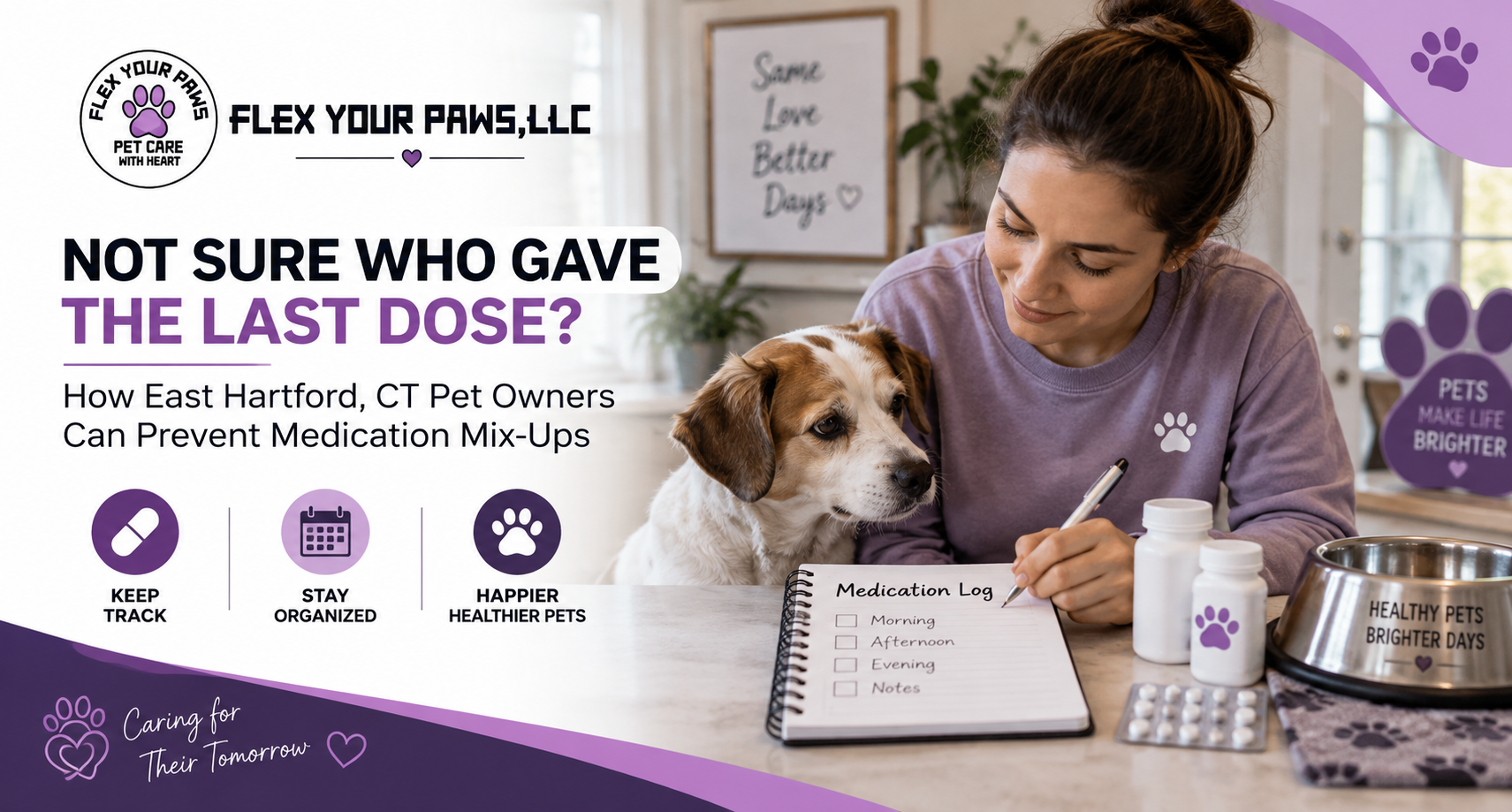
Not Sure Who Gave the Last Dose? How East Hartford, CT Pet Owners Can Prevent Medication Mix-Ups
Posted by: sarah Tags: no tags | Categories: Uncategorized
30
Giving a pet medication can become surprisingly complicated when more than one person shares the responsibility. One family member gives the morning pill before work, another handles the evening medication, and a pet sitter may step in when everyone is away. Then comes the stressful question: “Did someone already give this dose?”
For East Hartford pet owners, medication mix-ups are more than an organizational inconvenience. Depending on the medication, giving an extra dose or missing a scheduled dose could affect a pet’s health. A simple system for recording medications can make daily care clearer and help everyone follow the veterinarian’s instructions consistently.
Why Medication Mix-Ups Happen So Easily
Most medication mistakes are not caused by a lack of care. They can happen because everyday routines are busy.
Someone may give the dog a pill but forget to tell another family member. A medication may be given later than usual. Different prescriptions may follow different schedules. Instructions can become even harder to track when a pet requires medication alongside meals or at particular times.
This is why a clear routine matters. Services such as Flex Your Paws LLC also emphasize following detailed care instructions when looking after pets in their own homes.
Create One Medication Schedule Everyone Uses
Instead of relying on memory, create one written schedule and make sure every caregiver uses it.
The schedule should be based directly on the veterinarian’s instructions. Include the medication name, prescribed amount, scheduled time, and any instructions provided by the veterinarian or dispensing pharmacy.
Keep the schedule somewhere easy to access. This could be a printed sheet near the medication storage area or a shared digital record.
The important part is consistency. If different family members keep separate notes, nobody has a complete picture of what has already happened.
Record the Dose Immediately
A medication log only works when it is updated.
After giving a medication, record it immediately rather than planning to do it later. Include the date and time and, when useful, the initials or name of the person who administered it.
Families researching Pet medication administration in East Hartford CT may find that this simple habit becomes particularly useful when several prescriptions or caregivers are involved.
Think of the log as a handoff between caregivers. The next person should be able to look at it and quickly understand what has already been done.
Don't Automatically Give Another Dose When You're Unsure
Imagine you arrive home and see that the medication is still sitting on the counter. You cannot reach the person who was supposed to give it, and nothing has been written in the log.
It may be tempting to give the medication “just in case.”
That is not a safe assumption. The correct response to a potentially missed or duplicated dose depends on the specific medication, dose, timing, pet, and medical situation. FDA guidance for animal medications recommends talking with the veterinarian about what to do if a dose is missed.
If you genuinely do not know whether a dose was administered, contact the prescribing veterinarian or appropriate veterinary professional for instructions rather than automatically repeating or changing the dose.
Keep the Original Instructions Available
Medication schedules should not be created from memory.
Keep the veterinarian’s instructions, prescription label, and relevant medication information together. Do not transfer medication into an unidentified container where important directions could become separated from the product.
The FDA advises owners to read labels carefully and give animal medications according to the veterinarian’s directions.
If instructions on a label appear different from what you remember being told, contact the veterinary practice for clarification instead of deciding which instruction seems correct.
Make Caregiver Handoffs Clear
Medication routines become especially important when a pet sitter, friend, relative, or another caregiver takes over.
Before leaving, review the schedule together. Explain where medications are stored, provide the veterinarian’s contact information, and make sure the caregiver understands exactly how completed doses should be recorded.
For owners using Pet medication administration in Vernon, providing written instructions can help maintain the same routine when someone else becomes responsible for the pet.
Avoid giving vague directions such as “one pill around dinner.” Written instructions should match the veterinarian’s directions and clearly identify the medication and scheduled routine.
What If Your Pet Refuses the Medication?
Another source of confusion happens when an owner tries to give a medication but is uncertain whether the pet actually swallowed the entire dose.
A tablet might be found on the floor afterward, or a pet might spit out part of a medication. Liquid medication can also be difficult to assess if some is lost during administration.
Do not automatically give another full dose. Contact the veterinarian or dispensing pharmacy for advice about that specific medication and situation.
The same principle applies if a pet vomits shortly after receiving medication. Whether another dose is appropriate depends on factors that should be evaluated by a veterinary professional.
Keep Notes About Unexpected Changes
A medication log can track more than completed doses.
If you notice vomiting, diarrhea, unusual tiredness, appetite changes, difficulty walking, behavioral changes, or another unexpected response after starting medication, write down what happened and when.
This information can help a veterinarian understand the timing of changes. If a pet develops severe or rapidly worsening symptoms, has trouble breathing, collapses, experiences seizures, or you suspect a potentially dangerous overdose, seek urgent veterinary guidance rather than waiting for the next scheduled appointment.
Final Thoughts
Managing pet medication becomes much easier when everyone follows the same system.
For East Hartford pet owners, a shared schedule, immediate dose logging, clear written veterinary instructions, and careful caregiver handoffs can reduce uncertainty. Most importantly, when nobody knows whether a dose was given, avoid guessing.
Medication needs vary significantly from one pet and prescription to another. When something does not go according to plan, getting guidance from the prescribing veterinarian is safer than changing, repeating, skipping, or adjusting medication based on assumptions.